
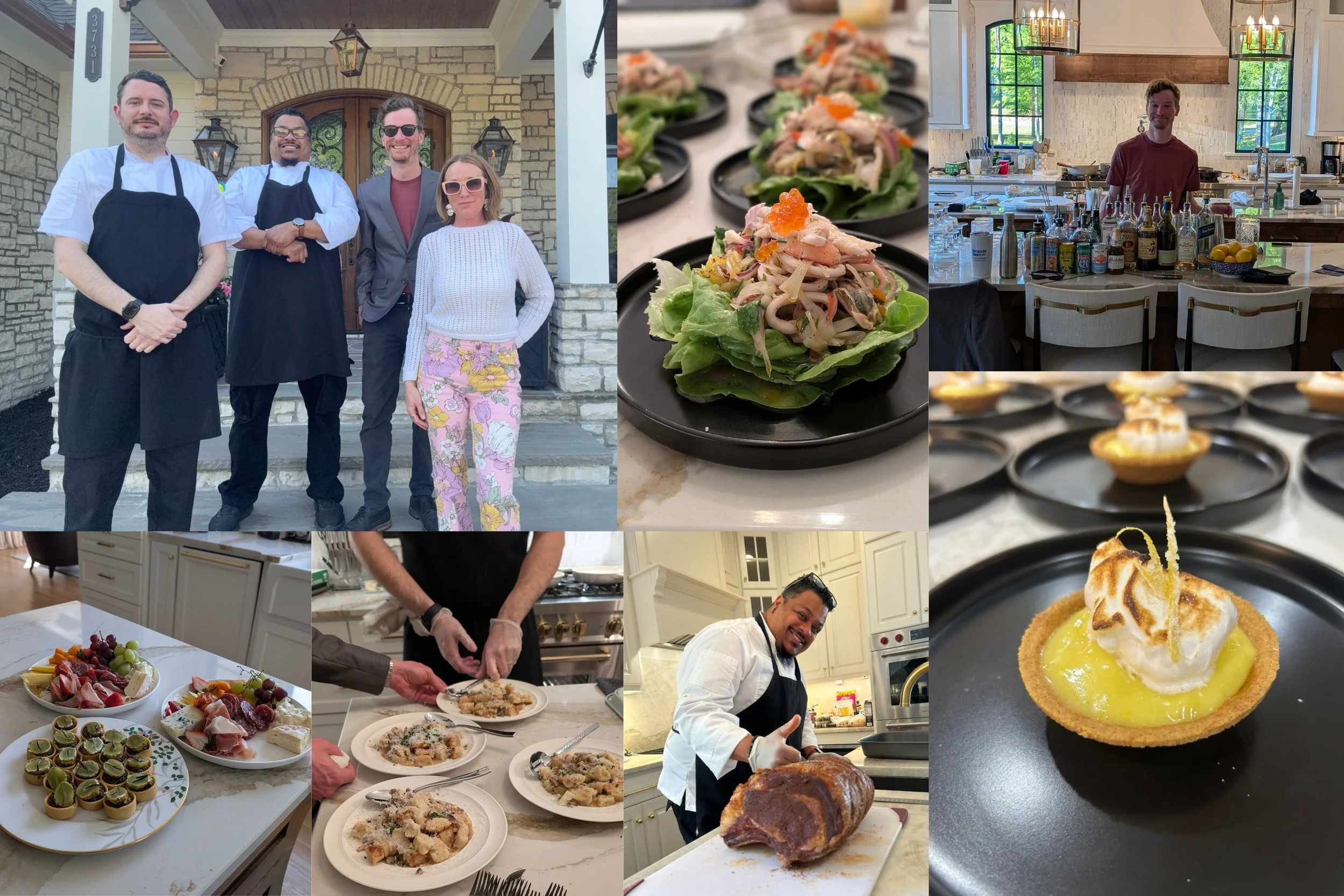
Catering is not a job you explain to someone in a single sentence. People hear the word and they picture passed trays and chafing dishes and stuffy hotel ballrooms with buffets. That's one version of it. A particular version. The larger version is something different: it is the act of going somewhere, making it feel like somewhere, and feeding people well while you're there. It is hospitality in the most literal sense of the word. You are in service. That is the whole point.
What that actually requires is something most people never see.
The Masters is one of those events that doesn't just fill hotels — it fills private homes, rental properties, leased estates. People fly in from everywhere and they want to eat. They want a kitchen running in a house they rented for the week, a table set like they mean it, food that doesn't feel like a concession to the circumstance. That's where we came in.
We cooked for private homes during Masters week. And the first thing I'll tell you about that job is that it started long before Chef and I touched a pan.
Sourcing product for Augusta during Masters week is its own discipline. The city's supply chain gets overwhelmed. If you're waiting until you arrive to figure out where your proteins are coming from, that’s a problem. I made that mistake, through some wheeling and dealing we sourced Wagyu beef raised and slaughtered in Georgia for our client’s international BBQ inspired dinner. You try to build menus backward from what's actually available, not forward from what sounds good on paper. You find out what you can get locally and what has to travel with you. That constraint is real and it sharpens your thinking. You stop writing menus you can't execute and start writing menus that are honest about the conditions.
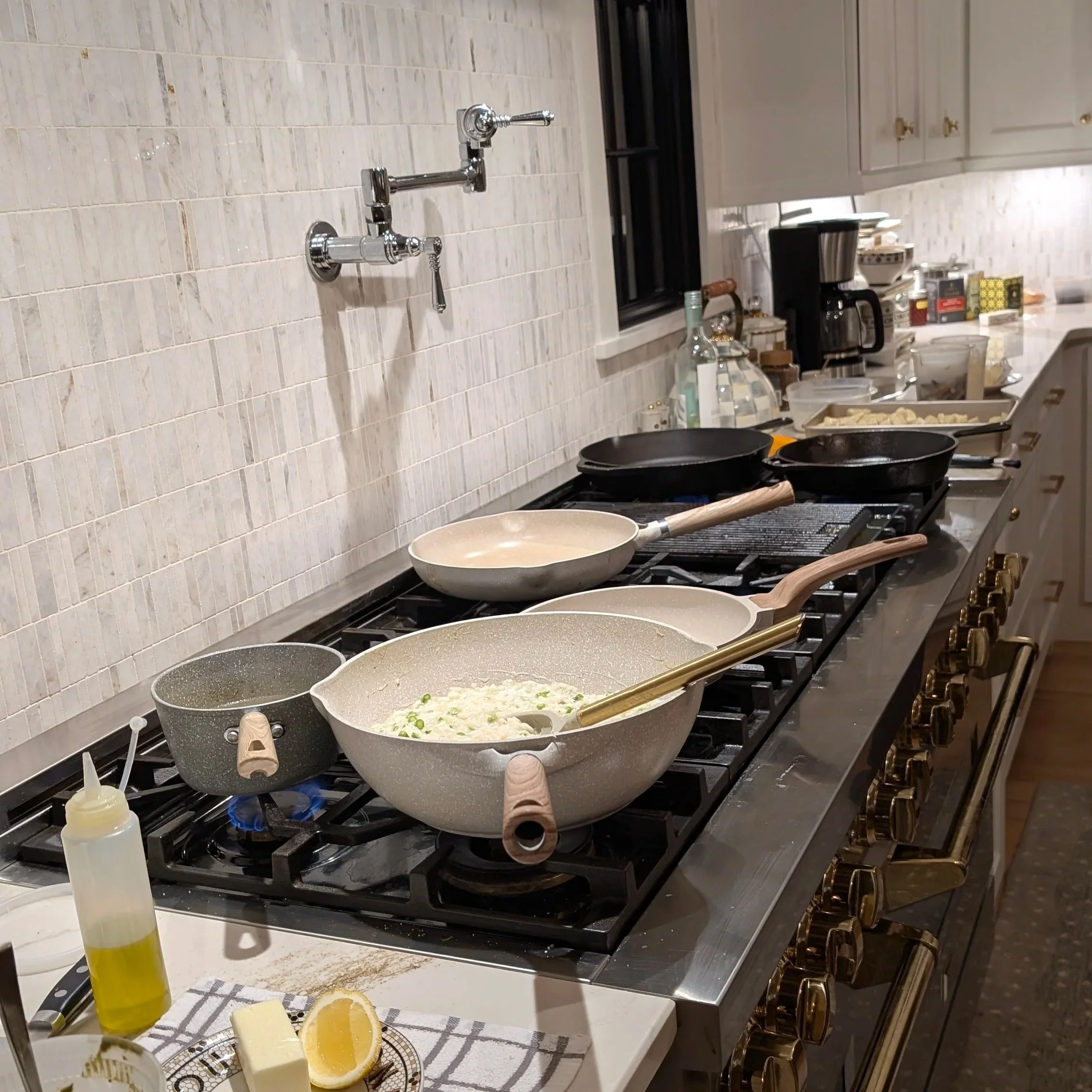
Then there's the space. A rental home is not a catering kitchen. It never is. You walk in and you take inventory — burner count, oven size & calibration, counter surface, refrigeration capacity, freezer space, how much garbage can we produce…You're mapping the room before you cook a single thing. You're figuring out the flow: where prep happens, where loading out happens. How do I connect to this Airbnb’s printer to get the prep list printed out for myself and Chef to execute? Sometimes you have to ask yourself: “What is the best workaround to make a Weber grill into a makeshift offset smoker?”…cake pan, wood chips, portable butane burner, aluminum foil and some prayers to the culinary gods…got it.
Execution is the part that looks like the job. It isn't. It's the proof that you did the job. Service should feel effortless to the people eating. When the guests sit down, you are committed. Every sauce reduced, every protein butchered, every component built. Plates arrive. Food is right. The room hums. Cheers! Nobody at the table needs to know that you drove two hours to get octopus and that the ovens tripped a breaker and you adjusted on the fly, that the rental house had one Oster hand mixer from the 1980s to temper your eggs for desserts. That's not their problem. It was yours. You solved it before they sat down.
This is what catering is, at its core. Augusta taught me something specific about that. It is the willingness to subordinate your comfort to someone else's experience. It is problem-solving in conditions you didn't design, with resources you had to find, for people who deserve not to feel the effort. That's hospitality. Not the cocktail trays. Not the setup. The orientation underneath all of it — that you are there to take care of someone, and that matters more than whether the conditions are convenient. What you're left with after a week is the workshop talk on the trip back home. The fun times, the crazy execution, the best bites of food, the inside jokes created after 5-18 hour days in a row. And just how good it feels looking back on how much we crushed it.